
Charlie Kirk, History, and the Hitler Comparison
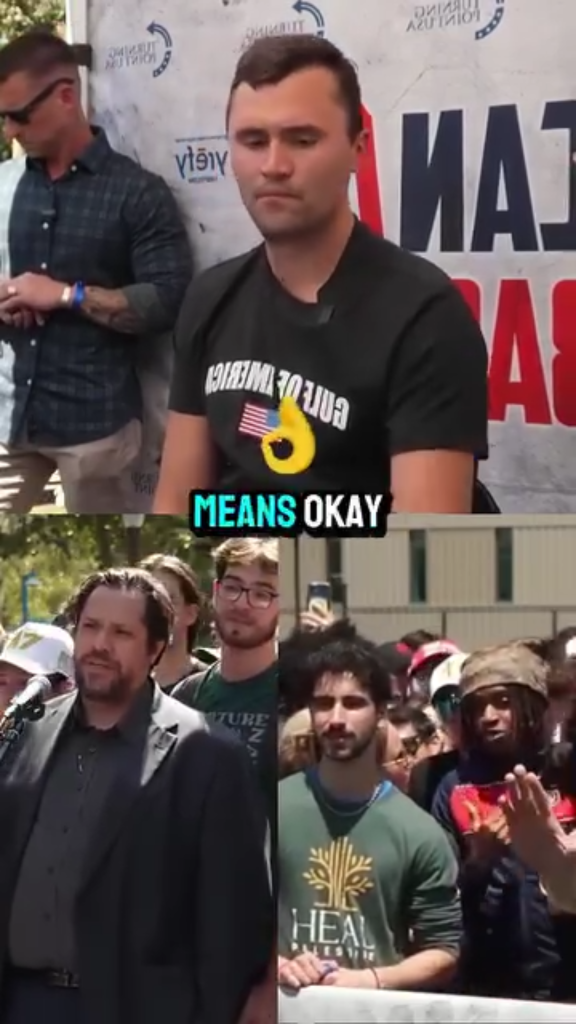
In a public exchange, Charlie Kirk is questioned by a college professor who teaches World War I and World War II history. The professor raises a familiar concern: whether Donald Trump’s rise to power can be compared to the political conditions of Weimar Germany and, by extension, to Adolf Hitler. He frames the question as objective, academic, and historically grounded.
At first glance, the question sounds reasonable. History exists so we can recognize patterns and avoid repeating past mistakes. Yet what makes this exchange important is not the comparison itself, but how easily history can be reduced to surface-level similarities. When this happens, history stops being a tool for understanding and becomes a tool for fear ⚠️.
📚 History, Comparison, and the Roots of Fear
Charlie Kirk does not reject history. Instead, he challenges the method behind the comparison. He argues that historical analogies only work when the foundations truly align. Without that, comparisons distort reality rather than clarify it 🧠.


🇩🇪 Weimar Germany, Hitler, and Free Speech
Weimar Germany existed in a unique historical context: a defeated nation, economic collapse, mass humiliation after World War I, extreme censorship, political imprisonment, and the systematic destruction of free speech. Hitler’s rise was not simply about rhetoric or popularity. It was built on silencing journalists, eliminating opposition, and removing fundamental freedoms step by step 🕯️.
This leads to the most important distinction in the conversation: free speech. Charlie Kirk asks a direct question — was Hitler pro–free speech or anti–free speech? The historical answer is clear. Under the Nazi regime, free speech did not exist. Journalists were imprisoned. Political opponents were jailed or killed. Thought itself was controlled 🔒.
From here, the conversation shifts to whether similar conditions exist today. The implication is not that any modern leader is perfect, but that equating different historical figures without acknowledging core structural differences weakens historical understanding instead of strengthening it.
The professor attempts to extend the comparison through rhetoric and symbolism — slogans, aesthetics, personality cults. Yet this is where analysis begins to break down. Visual similarities are not structural similarities. Emotional reactions are not historical evidence. When symbolism replaces context, history loses its grounding 🎭.
⚠️ When History Inflames Instead of Educates
What stands out in this exchange is not a political victory, but a reminder: history should clarify, not inflame. When comparisons are exaggerated, they stop educating and start manipulating fear. Fear, as history repeatedly shows, is one of the most powerful tools for division 💥.
There is no denying historical reality. Adolf Hitler was a war criminal. The concentration camps, mass killings, and systematic dehumanization of millions are facts. Acknowledging this truth is essential. At the same time, modern human rights frameworks emerged only after the Second World War, born from collective trauma. Humanity paid a devastating price before it drew clear moral boundaries 📜. Awareness came too late.
🌸 Responsibility, Unity, and 31 May – Flower’s Day
From my perspective at Shades of Romeo, this is where the conversation moves beyond politics. If fear-driven societies collapse into violence, then the real question becomes how we act before fear takes over again 🌱.
I agree with Charlie Kirk on a fundamental level when he says that rights come from God, not from parliament. Freedom is inherent, not granted. And if freedom comes from something higher, then responsibility comes with it ✨. Freedom is not only something to defend in debate — it is something to live.
This is where 31 May – Flower’s Day finds its place. It is not a political statement, but an action. Offering a flower freely is a simple human gesture — kindness without permission, positivity without force 🌹. When many people choose the same positive action on the same day, something shifts. The atmosphere changes. People connect. Fear loosens its grip 🤝.
History shows what fear can do. Shades of Romeo exists to explore the opposite: what happens when people choose conscious, positive action together.
If fear can shape history, then so can unity — when we choose it deliberately 🌍.
Pingback: 🌹 Voters, Voices, and Responsibility - Shades of Romeo | 1£ for a rose